You have the experience. You have the PMP. So why are you stuck coordinating?
Become The Project Manager Leadership Puts On The Project That Can't Fail
In eight weeks, spending only 15 minutes each day and without needing any additional certification.
No more inapplicable theory.
The Practical Project Management Framework is the system which I have developed over 15 years and refined together with more than 500 project managers – a system for structuring projects, for controlling stakeholder expectations, and for ensuring that projects are completed on time and within budget when the plan meets reality.
Instant access | Monthly Investment Plan | 30-day guarantee
✅ Put the first system into action on Monday; you won't have to complete the course in order to start noticing the difference in the way your projects operate.
✅ 15 minutes each day; roughly 14 hours from start to finish (less than two working days) to change how you manage all your projects from now on.
✅ Designed for project managers who are already managing live projects — not for those who have a free weekend and good intentions.
15+ Years
Industry Experience
500+ PMs
Mentored & Coached
Author of
Practical Project Management
$20M+
Large Projects Managed
Your Career Might Be at Risk Without You Even Realizing It
Pay attention because this is important if you want to stay relevant as a project manager in the age of AI!
Most project managers face one major problem that AI has created in the last 12 months.
What is it?
Well, let me ask you a question: if you are currently running a project…
Which Of These Sounds Like Your Last Six Months?
Your dashboard is green, but your risks are red. What’s worse, you’re the only one on the project who wants to mitigate them.
Every workstream is delivering, but the pieces no longer add up. You spend more time overcoming alignment challenges than technical issues.
Teams have quietly started working around the plan. Nobody announced it. It just happens all the time.
You were hired to manage this project. But you spend your week chasing updates, scheduling meetings, and keeping the tracker up to date.
Your Jira measures what’s already been done. It never tells you whether the next step is even feasible.
The numbers look fine, but the conversations have changed. There are more expectations of you. People want technical aspects explained on the spot.
And if you’re like most of the project managers I work with, you’re carrying something you probably haven’t said out loud to anyone.
"Busy, but not valuable."
"Certified, but not a leader."
"Years of experience, and a quiet sense that the job you’re doing isn’t the job you dreamed of."
Right?
If after reading that, you can see how ANY of that applies to you...
Then now you know why your career is at risk… because you're in the Coordinator Trap.
You Weren’t Hired To Coordinate A Project. You Were Hired To Manage One.
Most project managers think the fix is a better tool. A better model in ChatGPT. Another certification.
More meetings?
But here’s the thing:
You were hired to manage this project. And then you were handed a coordinator’s job.
Chase the updates. Schedule the meetings. Keep the tracker current. Report green.
All of it is necessary. But it has lost its value.
I call it the Coordinator Trap.
And here’s why it holds you:
A green tracker can hide a red outcome. A project can be 100% on schedule and 100% wrong. And you're the only one who knows it (every single time).
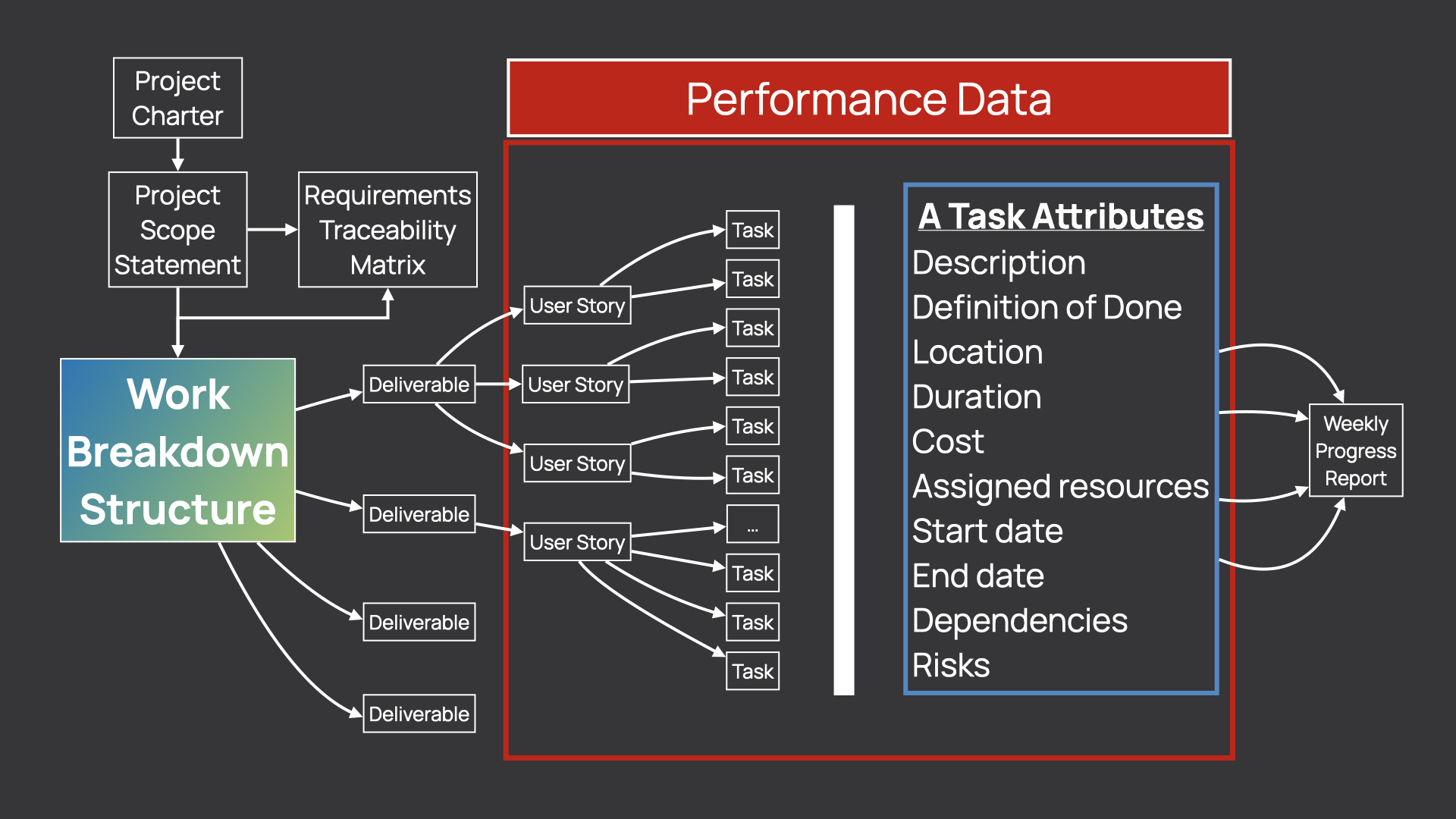
Think about what actually happens when you do the real project manager’s job.
You raise the uncomfortable trade-off early. You say the thing nobody wants to hear. You flag the risk while there’s still time to do something about it.
And you look like the one causing the delay.
Meanwhile, the person keeping the dashboard green looks like the one performing well. Nobody gets credit for the disaster that didn’t happen… because it didn’t happen. There’s nothing to point at.
Every incentive around you pays you to keep things looking fine. Recognition comes for problems you solved…even if you allowed them to happen.
That’s the trap.
But None Of This Is Your Fault…
So don’t be ashamed of any of this.
You didn’t fall into the Coordinator Trap. You were paid to stand in it.
You did exactly what you were told. Get certified. Follow the process. Keep the stakeholders informed. Report on time.
And Here’s Why Your Career is at Risk
Look at what’s changed in the last 12 months.
The work that used to fill your week. The meeting notes, the summaries, the follow-up emails, the status deck you rebuilt every Thursday… you don’t really do that anymore, do you?
AI does it now. Not ideal, but for pennies and in minutes.
So the coordination half of your job is quietly being handed to a tool. And it won’t stop at meeting notes. Every month, a little more of it goes.
That should be good news.
It would be… if the other half of the job - the strategic leadership, building processes, generating business value - were something you had skills and a framework for.
But it isn’t. Nobody ever gave you one.
Which brings a question to your organization, if it hasn’t arrived already:
“Why do we need five project managers, if one with AI tools can do all the coordination?”
You want an answer ready before someone dares to ask.
So, it’s time to leave the Coordinator Trap and re-learn project management.
The Cold Hard Truth Is:
There's A Huge Gap Between Project Management Theory And The Projects You Actually Run
Your PMP or PRINCE2 opened doors. It gave you the language.
But you don't need me to tell you it never showed you how to run a project inside a real company, right?
Very few companies run their projects by the book. That's one end of the spectrum.
But here's the problem:
Everyone else uses that as an excuse. They say, "Project management by the book doesn't work here."
So they swing to the other end of the spectrum: no project management process at all. Just a tracker, a status meeting, and a project manager chasing updates.
That's exactly how you end up in the Coordinator Trap.
But there's a sweet spot in the middle. Just enough project management to keep control of the project, and nothing that slows the team down.
Before I show it to you, let me explain why most project managers never find it.
Why "Get More Experience" Keeps You Stuck For 10 Years
Everyone "knows" project management. But how many people "know" it and still struggle to manage stakeholders' expectations, spot risks early, or be the strategic leader in the room?
As you can probably guess, thousands of project managers, right?
So what does the corporate world tell them to do?
It offers a simple, obvious solution:
"You need more experience."
You're not ready for large, complex projects yet. Spend 2–3 years running smaller ones first.
So it's rinse and repeat from there. You manage the same projects with the same people in the same environment, gaining the same experience.
Before you know it, you're a mid-level PM with 10 years of experience. Working harder than ever. An expert at running small, unimportant projects in bulk. And all for little to no progress in your career.
So here's the million-dollar question…
If you know practical skills are what move your career forward, why spend years waiting to collect them?
Why not start using a proven approach on the project you're running right now?
For most project managers I talk to, the answer comes down to one sentence.
"I'm Not Empowered To Work This Way."
"This is my organization's problem, not mine."
And I get it. You've probably sat in the meeting where a stakeholder called project management "additional work to do the real work."
Here's the part most people miss:
Your organization really did build the Coordinator Trap. That part isn't your fault.
But the belief that you need their permission to leave it? That's what keeps you on the hamster wheel. It drives your decisions, your actions, and your results… no matter how much you know.
Because nobody hands out that permission. Not your boss, not the PMO, not HR.
You don't get the authority first and then start leading. You start leading on the project you already have, and the authority follows.
And those stakeholders who called project management "additional work"?
They were right about the project management they'd seen. Heavy, by the book, and nowhere near real projects.
So the answer isn't more of that. It's all about the best practices of project management that actually worked in the real world.
The Practical Project Management Framework:
4 Principles That Work In Real, Chaotic Companies
That sweet spot in the middle is what I call the Practical Project Management Framework.
It rests on four principles:
1. If it hasn't survived a real company, it's not in here. Every process, tool, and technique has been tested multiple times on real projects, with real people. It's built for companies with normal, chaotic processes… so you don't need a perfect organization to make it work.
2. Projects are unique. Your approach isn't. You use the same project management structure on any project, in any company, and scale its complexity up or down to fit. So you stop starting from zero every time a new project lands on your desk.
3. Project management isn't a puzzle. It's LEGO. A few processes and tools are mandatory, and even those scale. Everything else is a building block you add only when it raises your chances of success. Your goal is the simplest approach that works… so your week goes into decisions, not paperwork.
4. Don't motivate people to do the work. Motivate them to follow the approach. Your engineers already know how to do their jobs. Most project plans just pile admin on top of them. This framework keeps people in their zone of genius and cuts the distractions… so following the plan becomes easier than working around it.
That's how you stop being reduced to coordinating, and become the project manager leadership puts on the project that can't fail.
But Building It Yourself Is HARDER Than You Think!
It seems like a pretty straightforward solution, doesn't it? Watch YouTube. Ask ChatGPT. Observe what works for others.
Just piece it together yourself and reap the rewards, right?
Unfortunately… no.
Building a repeatable process takes a lot of trial and error. And you can't fail on real projects that many times without it costing you your career.
It took me 15 years and more than 500 project managers to get it right.
You don't have to spend those years.
It all starts with mastering the Practical Project Management Framework. And I'm going to share all of it with you…
Introducing:
IT Project Management Mastery
The 8-week system that installs the Practical Project Management Framework on the project you're already running, in 15 minutes a day.
So you stop being reduced to coordinating… and become the project manager leadership puts on the project that can't fail.
This Isn't Another Course
You don't need more knowledge. You already have the experience, and probably a certification.
In fact, 80% of the project managers who join already hold a PMP. They didn't come for another 35 hours of exam prep.
They came for a system. Specific frameworks for specific situations, on the project in front of them, in the company they actually work for.
Because right now, the question running in the back of your head is "Am I doing this right?"
After Practical Project Management Mastery, it becomes "I have a framework for this."
"Finally Made Sense of 5 Certification Programs"
"I got PRINCE2 Foundation and Practitioner levels. I also have PMP certification, PSM 1 and 2. But to be honest, I only got the theoretical aspects of project management. This course allowed me to understand the hands-on practical applications. It boosted my confidence a lot."
— Fajenyo James, Project Manager
I Built It For The Project Manager I Was The Year I Almost Quit
If you've ever taken over a project where everyone needs something from you at once, chances are you can relate to this.
Years ago, I stepped into a complex IT project as a senior project manager. More than 30 highly experienced engineers. A client I didn't know. Stakeholders demanding a detailed plan built on vague requirements.
The team resisted me from day one. I tried to fix every problem myself. I felt like an impostor, and I seriously thought about quitting.
Then I remembered something an early mentor told me:
"You should lead a project as the director of your own company."
So I stopped chasing problems and started running the project the way a president runs a small company. I owned the goal. I built processes and let the team own their part.
Stakeholders stopped micromanaging and started asking for my advice. And for four years in a row, my projects were delivered on time and within budget.
That approach became the Practical Project Management Framework.
Practical Project Management Mastery is how I hand it to you, without the years of trial and error it cost me.
Here's What You're About To Get
The core training: the Practical Project Management Framework in 5 modules. Built on the four principles you've just read: only what's survived real companies, one structure for every project, LEGO instead of a puzzle, and an approach your team will actually follow. So you have a system for the whole job, not just the part that shows up on the tracker.
Ready-to-use templates and real examples. Including the project charter, scope management plan, stakeholder register, risk log, RAID matrix, and risk management plan. So you start every project from a proven version instead of a blank page.
AI prompts that take the admin off your plate. Our students tell us they save 8–12 hours a week within the first month. So the coordination work goes to the tool, and your week goes to the part of the job that needs you.
15 minutes a day, for 8 weeks. About 14 hours in total. Less than two working days to change how you run every project after this one.
Lifetime access, including every future update. As the tools change, the course changes with them. And every update is yours, free.
Once you enroll, you'll get instant access. So you can start tonight, and use your first lesson on your project tomorrow.
Just 3 monthly installments of $189 · or enroll in full for $497 and save $70.
"From Newly Hired to Portfolio Director in 8 Weeks"
"I have wonderful news. I have been promoted to Portfolio Director, managing Project Managers and the Projects Portfolio. They appreciated my leadership skills, my organization, my preparation, my efficiency.
And I owe this to my work with you, your commitment to high standards, the high quality of your course, and yes my discipline and determination in applying everything you taught me.
Like I said before… you changed my life."
— Elisabetta, Portfolio Director
Inside IT Project Management Mastery
Each module follows your project in the order it needs it. So what you learn in the evening, you can use the next day.
Module 1: Master the Fundamentals so no Project Surprises You
"Stop running on instinct. Start running on a model."
You have run projects for years as an IT Project Manager and still get that Sunday-night feeling that you are improvising. That feeling is a structural gap. Nobody ever gave you the high-level map that lets you look at any project, of any size, and know what work is coming.
The senior IT PM mindset: how the people who get promoted think about the role, versus the accidental PMs who got handed the title and hoped
The software development life cycle, decoded: see the whole shape of the work before you write a single plan
The project management process groups: the repeatable spine you run on every project, so no project is ever a blank page again
What nobody tells you about why experienced PMs still feel like they are faking it
You will learn why projects are unique, but you manage them using the same project management framework.
Module 2: Start Any Project Half-Won
"What you do in week one decides the rest of the project."
You know the meeting. You explain the scope, and minutes later, someone makes a decision as if you never spoke. That is what a weak start looks like. The damage shows up later, disguised as scope creep and finger-pointing.
The first questions to ask on day one, so trouble surfaces while it is still cheap to fix
The truth about client goals: they rarely know what they need, and how you become the guide who finds the outcome that grows their business
A Stakeholder Register and Stakeholder Engagement Plan: know exactly who can sink this project, and what each of them needs
A Stakeholder Management Plan that keeps the side-channel decisions from blindsiding you
A working Project Charter you can produce fast (no heavy formal document, no committee, no template theater)
You walk in as the person who sets the terms of the project, not the one who caters to everyone's whims.
Module 3: Plan a Project That Lands on Time
"The deadline is won or lost weeks before it arrives."
The 11pm text asking for an extension. The deadline that was always going to slip. You did not have a planning problem on the day it blew up. You had it weeks earlier, when the plan was a wish instead of a structure.
A Scope Management Plan and Requirements Traceability Matrix, so scope creep has nowhere to hide
A schedule, a budget, and estimates you can defend in front of a stakeholder who is pushing back
Practical risk management that pulls from your team's real expertise, not a theoretical register nobody reads
A Risk Management Plan, a Risk Register, and a RAID Log that turn "what if" into a tracked, owned list
The one planning move that lets you deliver on time and on budget without living at your desk
Methods that scale from a small project to a full program
Even an agile project needs a high-level or release plan before you execute. You build it once and stop hoping the project lands. You engineer it to.
Module 4: Execute and Finish Without Burning Out
"Run it so the team sees a leader, not someone chasing updates."
This is where the job actually lives. Not in the plan, in the leading. The status nobody reads, the email you have redrafted four times, the meeting that solves nothing, the change request that quietly eats your timeline. Each one is a routine you were never taught, so each one costs you an evening.
Status reports and a meeting cadence that give the project transparency, so you stop being the only person who knows what is happening
The emails and reports that move work forward, written once and written well, instead of redrafted at 9pm
A simple way to track progress, resolve conflict, and run a change log so scope changes go through you, not around you
Change control that holds the line without making you the person who always says no
A clean project closeout with lessons learned, so the project ends on purpose instead of fading out
You become the leader people want to work with and follow. The unexpected stops being the thing that runs your week. You have a routine for it.
Module 5: Run Agile and the Project at Once
"Become the Agile Project Manager the job market keeps asking for."
The whole IT industry runs Scrum or Kanban. If agile is the part you fake your way through, that gap is visible, to your team and to a hiring manager. You should not have to choose between being a good project manager and being good at agile.
How to combine traditional project management with agile and use the best of both
Scrum and Kanban put to work the way they run on real teams, sprints and backlog included, not the textbook version
The Scrum Master role and the PM role, held at once, without dropping either
The principles applied in the tools the job uses: Jira, Asana, the boards your team already lives in
Positioning as an Agile Project Manager, which opens more roles the next time you are in the job market
You stop running daily rituals. You build teams with ownership for the work they do.
Bonus: How to Manage AI Projects Like a PRO
"AI and GenAI projects are flooding every industry."
You're expected to lead them. But you don't understand the technology, the risks, or how to make decisions.
What you get:
Complete AI Literacy: Everything a PM needs to know about AI/ML without becoming a data scientist
The AI Solution Selection Framework: A decision-making system to evaluate and choose AI solutions for your project
The Context Window Calculator: Practical examples on how to calculate requirements (so you're not blindly trusting vendor promises)
AI Governance & Security Guide: Critical considerations about data governance, privacy, and compliance
What you'll master: Full preparation for the wave of GenAI and ML projects overtaking every industry. You'll lead these projects with confidence, not fear.
Ready for the IT Industry
"This course helped me to create a real picture of Project Management and the PM's key responsibilities based on the journey from 'starting' to 'finishing' the project. I've structured my knowledge and gained the correct mindset. I feel like I'm ready for my first job as a PM in the IT industry."
— Mike, IT Project Manager
Let's be honest about this investment:
Compare the investment in this course ($497) to other options:
A single 1-hour session with a PM coach? $150-300
A failed project on your record? Priceless (in a bad way)
A PMP certification? $1,000-1,500 (plus 35 hours of generic training)
An AI productivity course? $500-1,000 (and they don't know PM)
The average salary increase after mastering practical PM skills? 10-20%.
If you earn $40,000/year, a 10% raise is $4,000 more annually. This course pays for itself in 1.5 months of your increased salary.
But here's the kicker:
Students report saving 8-12 hours per week after AI and productivity tips. That's 40-50 hours per month.
If your time is worth $20/hour, that's $800 – $1,000 in reclaimed time value per month.
Just 3 monthly installments of $189 · or enroll in full for $497 and save $70.
This course is perfect if you:
✅ Have PMP, PRINCE2, or Scrum certs but struggle to apply them to real projects
✅ Run small-to-medium IT projects (2-20 people) and want to advance your career
✅ Feel like you're "winging it" despite years of experience
✅ Are a senior dev/BA/QA who got promoted to PM without training
✅ Know AI is important but don't know how to actually use it in your daily PM work
✅ Want to stay relevant as AI transforms the PM profession
This course is NOT for you if:
❌ You want another certification to add to LinkedIn (this is about skills, not credentials)
❌ You're managing construction, pharma, or non-IT projects (my framework is IT-specific)
❌ You already confidently lead complex programs and feel zero imposter syndrome
❌ You think AI will replace project managers (it won't. But it will replace PMs who don't adapt)
❌ You think you can master PM by watching 3 YouTube videos
The results keep coming in
Richard Akinyemi, PMI-CAPM and PMP Certified
"As someone who is both PMI-CAPM and PMP certified, I can confidently say that this course exceeded my expectations. What's on offer here is definitely better than typical PMI courses out there. This course is a valued ASSET to OWN AND KEEP."
Yuliia Skuridina, IT Project Manager
“I struggled with managing a project from start to finish.
Now, I have structured my knowledge and realized that many complex processes can be broken down into smaller steps.
Every project manager should go through this program from Dmytro, no matter where they are in their career. It is not just a series of videos explaining what project management is.
At every stage, it provides practical steps with instructions on what to do, where to start, and what outcomes to expect."
Hisham A., Project Manager
"I can see a huge improvement in my relationships. Many of my skills have enhanced: communicating, leadership, time management. What you are doing is extremely great and paves the way for the next generation of project managers. This is worth every penny. I cannot believe this costs less than the PMP."
30-Day "Learn It, Apply It, Master It" Guarantee
Here's the deal:
Enroll in IT PM Mastery. Go through all the modules.
Implement the frameworks in your actual projects.
If, after 30 days, you don't see measurable improvement in how you handle stakeholders and team accountability, email me. I'll refund every penny.
Keep all the templates, scripts, and frameworks. No hard feelings.
Why I can do this: Because the system works. 574 PMs have completed this course. The frameworks are battle-tested across 50+ projects over 15 years.
The only risk is NOT taking action.
Lifetime access • Start in 2 minutes • Risk-free for 30 days
"I realized I have gaps in my knowledge."
"This course has re-equipped me with the knowledge, skills, and confidence boost I need to get back out there and deliver awesome projects."
— Ibrahim Akinteye, IT Project Manager
What people asked before signing up for the IT Project Management Mastery?
If you have any additional questions related to the course, use the chat button below. I answer those questions personally.
"I don't have time for another course."
I get it. You're already overwhelmed.
Here's the truth: Your workload will never decrease. If you're waiting for a "slow period" to invest in your skills, you'll wait forever.
That's exactly why the AI integration is so powerful. Most students save 8-12 hours per week within the first month by using the AI prompts to automate administrative work.
You don't need more time. You need better systems and tools. This course gives you both.
"What if this doesn't work for my industry/company/situation?"
The framework is built for IT projects, and IT projects run in every industry:
Enterprise tech (Oracle, SAP implementations)
Healthcare (HIPAA-compliant system rollouts)
Financial services (regulatory-heavy projects)
Startups (chaotic, rapidly changing environments)
Government (bureaucratic, slow-moving organizations)
The principles work because they're based on human psychology, not industry-specific tactics. Stakeholders are stakeholders. Team motivation is team motivation. Politics is politics.
"I'm not technical enough."
This isn't a technical course. This is a PM course. If you can manage a project, you can implement these frameworks. No coding. No complex systems. Just proven strategies for managing humans under pressure.
"Will AI replace project managers? Why should I learn this?"
No. AI won't replace project managers.
AI will take the coordination half of your job. It's already started. What it can't take is the other half: the trade-offs, the stakeholder calls, the judgment. That's the half this course gives you a system for. The AI prompts take the admin; the framework gives you the job.
Here's the reality: AI is terrible at the things that make you valuable, like stakeholder relationships, strategic thinking, conflict resolution, reading the room, and making judgment calls.
AI is EXCELLENT at the things that drain your time: drafting documents, summarizing meetings, analyzing data, and creating first-draft communications.
This course teaches you to:
Keep the high-value human skills (leadership, strategy, relationships).
Offload the low-value, busy work to AI.
Help you prepare yourself for your first AI or Data Project.
You become a PM who delivers better results in less time. That's called job security.
"I already have PMP/PRINCE2/Scrum certs. What's different?"
Those certifications prove you understand the theory. This course shows you how to actually use it and how to augment it with AI.
Here's what I mean:
PMP teaches you about a Work Breakdown Structure. I show you how to create one in 45 minutes for a real IT project (not a 2-year factory construction). And how to use AI to identify missing work items.
PRINCE2 teaches you about Business Cases. I show you the 1-page version executives actually read. And the prompt that drafts it in 90 seconds.
Scrum teaches you the framework. I show you what to do when your team is half remote, your sprints keep getting interrupted, and your product owner ghosts for 3 days. Plus, how AI can help with backlog refinement and writing user stories.
Fun fact: Over 80% of my students are PMP-certified. They tell me this is where their certification finally clicked, AND where they learned to actually use AI effectively.
"What if I'm too junior/senior for this?"
If you're junior: This is your shortcut. Instead of learning through 5 years of painful trial-and-error, you get the playbook immediately.
If you're senior: This course systemizes what you've learned instinctively. You'll finally be able to teach your approach to others and take on program-level roles with confidence.
The sweet spot: PMs with 2-8 years of experience who want to level up fast. But I've had successful students ranging from total beginners to 15-year veterans.
"Why should I trust you specifically?"
Fair question.
I've led over 50+ IT projects across 7 industries. I've managed teams of 2 and teams of 50. I've worked with budgets ranging from $20K to $ 20 M.
But here's what matters more: I've failed. I've had projects go over budget, stakeholders revolt, and teams lose trust in me.
And I fixed those failures by studying what actually works, not what textbooks say should work.
This course is the distilled lessons from 15 years of practical experience. The stuff I wish someone had taught me in 2010.
"What if I fall behind?"
You have lifetime access. The suggested timeline is 7-10 weeks, but you can go faster or slower. Some students finish in 8 weeks. Others take 6 months. Both approaches work.
"I've taken other PM courses and they didn't help."
Let me guess: They gave you theory, not implementation. Or tactics, not systems. Or generic advice that didn't translate to your specific chaos.
This is different. Every framework includes:
The exact scenario where you use it
The specific language/scripts to use
The implementation steps
The common mistakes to avoid
Real examples from 50+ projects
You're not learning ABOUT stakeholder management. You're getting the exact playbooks.
"What if my company won't pay for it?"
Ask anyway. Most companies set aside $800–1,300 per person per year for training, and this is less than that.
And if the answer is still no…
Think of it this way: You're one promotion away from a salary increase. This course helps you get there.
What's the ROI on that?
"Can I get a refund if it doesn't work?"
Yes. Just send me an email within 30 days of enrollment.
From Editor to IT Project Manager in Two Months
"In a short few weeks, I reviewed the course materials.
Within a month, I had five interviews. I received a job offer as an IT Project Manager from a small company. And the offer was 26% higher than the average for an entry-level role!
Many thanks!"
- Sergey, Project Manager
You're Standing at a Fork in the Road
Path 1: Close this page. Go back to firefighting. Keep winging it. Hope your luck holds.
In 6 months, you'll still be working 60-hour weeks, second-guessing every decision, watching other PMs get promoted while you're stuck at mid-level forever.
And you'll wish you had a system.
Path 2: Click the button below. Spend the next 30 days mastering the frameworks that PMP never taught you.
Stop hoping. Start knowing.
Just 3 monthly installments of $189 · or enroll in full for $497 and save $70.
After 10 Years, Finally Got Clarity
"What I achieved from this course is clarity. A set of tried-and-true, trusted best practices, with clear and precise instructions on how and when to use these tools. This has taken me from any cloudy feelings about various aspects of project management to clarity."
— Olivia, Senior Project Manager, 10 years of experience
Here's What Happens Next:
Step #1: Get instant access to all 5 modules, bonuses, and templates (takes 90 seconds).
Step #2: Dedicate 15 minutes per day to master the PPM Framework and AI Fundamentals.
Step #3: Become the project manager leadership puts on the project that can't fail.
Lifetime Access | 30-Day Money-Back Guarantee | Proven Framework
You Read This Far...
...it means you know you need the frameworks
P.S. Remember the guarantee: 30 days to implement the frameworks. If you don't see measurable improvement, full refund. The only risk is staying stuck.
P.P.S. You're not learning "tips." You're installing the Practical Project Management Framework, one system for starting, planning, running and closing any project, agile included. The system 500+ PMs use to stop firefighting and start leading.
P.P.P.S. Still unsure? Ask yourself: What's your plan for the next bad project? The next stakeholder conflict? The next team member who misses deadlines? If your answer is "I'll figure it out," you don't have a system. You have hope. Hope isn't a strategy.
Just 3 monthly installments of $189 · or enroll in full for $497 and save $70.
Results shown on this page are not typical and are not a promise or guarantee of salary increases, promotions, job offers or time saved. Your results depend on your experience, effort, role, employer and market. Figures quoted from students are self-reported. This course is educational and does not guarantee any employment or financial outcome.